1The challenge
Maxifleur sells artificial plants, flowers and decor in many languages. Managing all of that directly in Magento didn’t scale, so product data lives in Plytix and is imported into Magento. But the importer wasn’t reliable:
- Imports stalled on large batches.
- Two imports could run at the same time and conflict.
- Duplicate images appeared after imports.
- New collections needed attributes the importer didn’t know, which meant developer work every time.
What is Plytix?
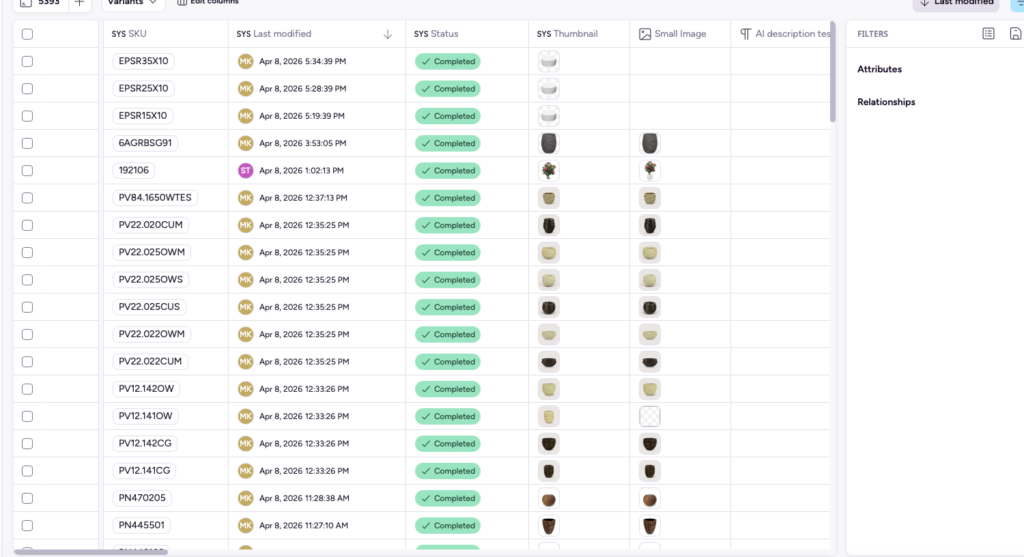
Plytix is a cloud-based PIM (product information management) system. The team maintains product data, images and translations in one place, and Plytix distributes them to sales channels such as Magento. A PIM is only as useful as the connection behind it: if the import fails, the webshop shows old or incomplete data.
2Our approach
We fixed the weak points of the Plytix-to-Magento importer and extended it together with Maxifleur as the catalogue grew.
Stable batch processing
Large imports are split into batches, with memory limits and timeouts tuned so runs no longer stall.
No more conflicts
Explicit locking makes sure only one import runs at a time.
Grows with the catalogue
New attributes for new collections, product group colours and Polish-language data for the move into Poland were added to the mapping.
Emergency stop
The live importer can be paused quickly without a full deployment, for example during a large data change.
3The result
Hundreds of product changes now synchronise daily across every Maxifleur store view without manual work. The content team edits product data only in Plytix, new collections reach the webshop faster and there are fewer manual entry errors.
Because the importer is flexible, it also carried Maxifleur’s expansion: the Polish store view was filled from the same PIM data.
Next step: letting the Maxifleur team map new Plytix attributes and categories to Magento themselves, without a developer.
?Frequently asked questions about PIM integrations
Which PIM systems can you connect to Magento?
We built and maintain the Plytix integration for Maxifleur. The same approach works for other PIM systems with an API or a structured export, such as Akeneo and Pimcore.
Why use a PIM instead of managing products in Magento?
With many products, languages and channels, a PIM keeps one version of the truth. Magento stays the place where you sell, the PIM the place where you manage product data.
What happens when an import fails?
Runs are logged, and locking prevents a second import from starting on top of a failed one. With the emergency stop the live importer can be paused straight away.
Can you fix an importer another agency built?
Yes. We start with an analysis of the current importer and then fix the bottlenecks, as we did here with stalled runs, conflicts and duplicate images.